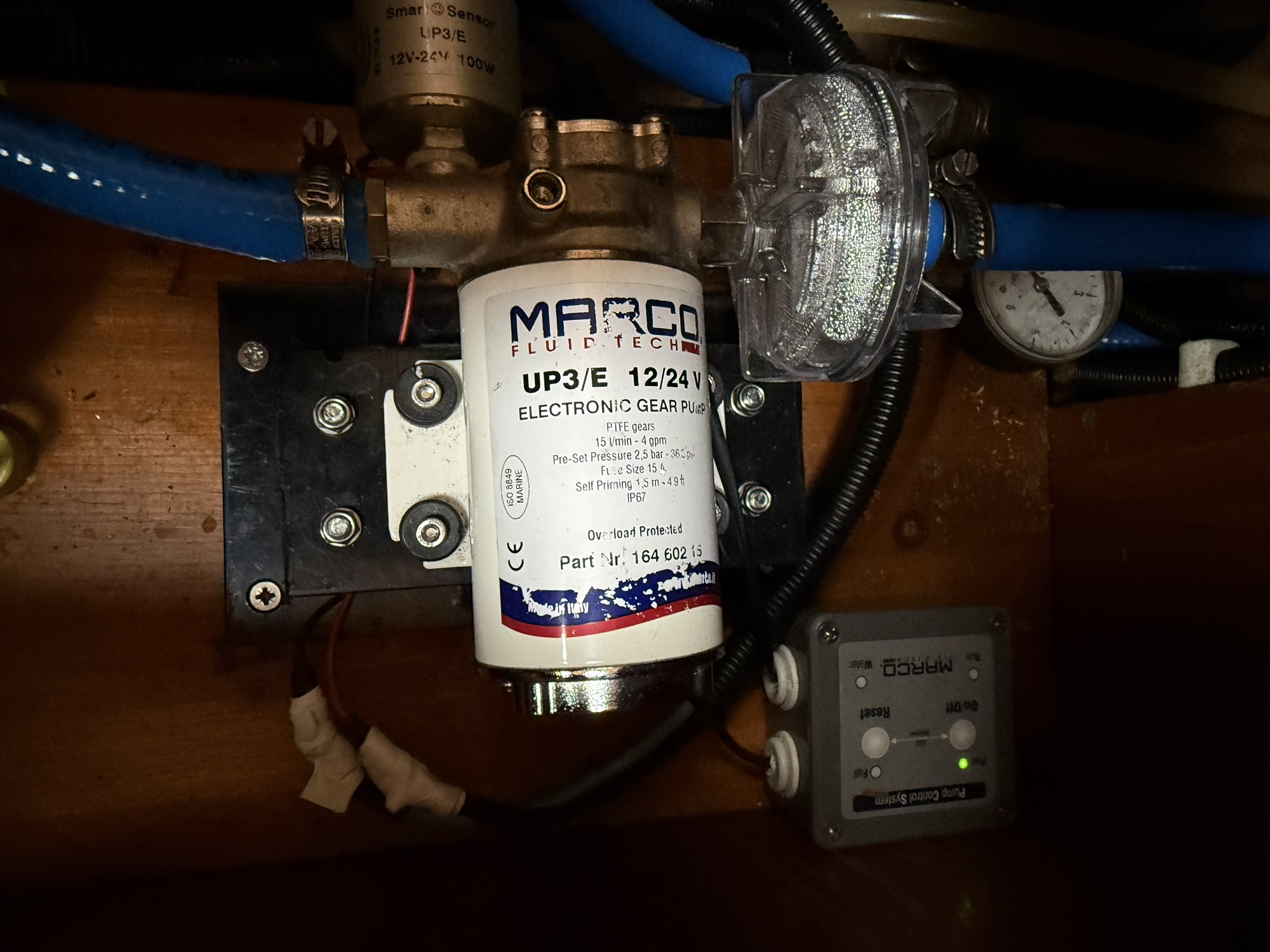
One of the spring jobs that I’d not written up but what has made a huge difference is some work on our freshwater pump. We have a Marco UP3/e gear based pump. It’s excellent and varies it’s speed to match the flow demand. I’d hoped it would self prime, but in our installation it doesn’t and needs a knurled bleed screw opening for a moment when we change tanks.
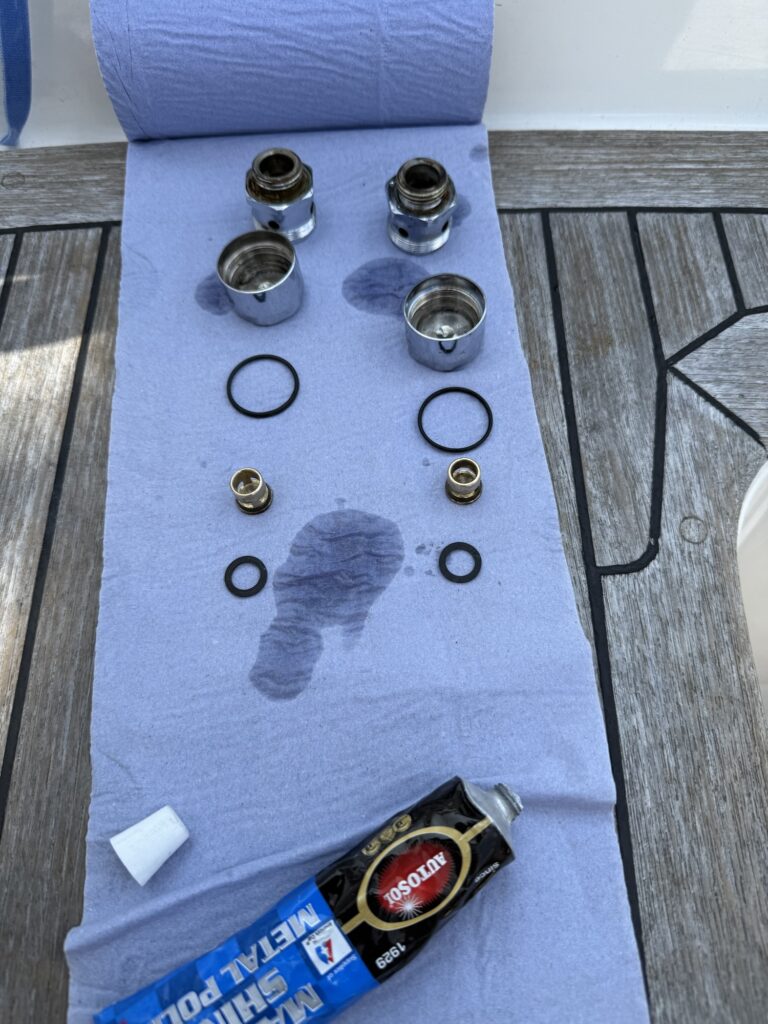
After six or more years use the need to prime it had increased and it might struggle to empty the tanks. That was partly due to some deposits on the valves on the breather lines, but stripping and polishing those in May 2025 didn’t entirely resolve the issue.
Cleaning and polishing the breather valves
This spring I bought a service kit for the pump – essentially two new helical gears, an O ring and new face plate. It was pretty trivial to install – though the gotcha is not to tighten the faceplate too hard, as over compressing the seal presses on the end face of the gears and prevents them from turning.
The pump had always been rather noisy with a high pitched whine. It was it’s Achille’s heel for us: I love the robust, durable pump, and variable flow but the noise was an irritant. It didn’t help that the pump was mounted to a shelf inside a locker under the saloon sofa that acted as a sounding board amplifying the noise.
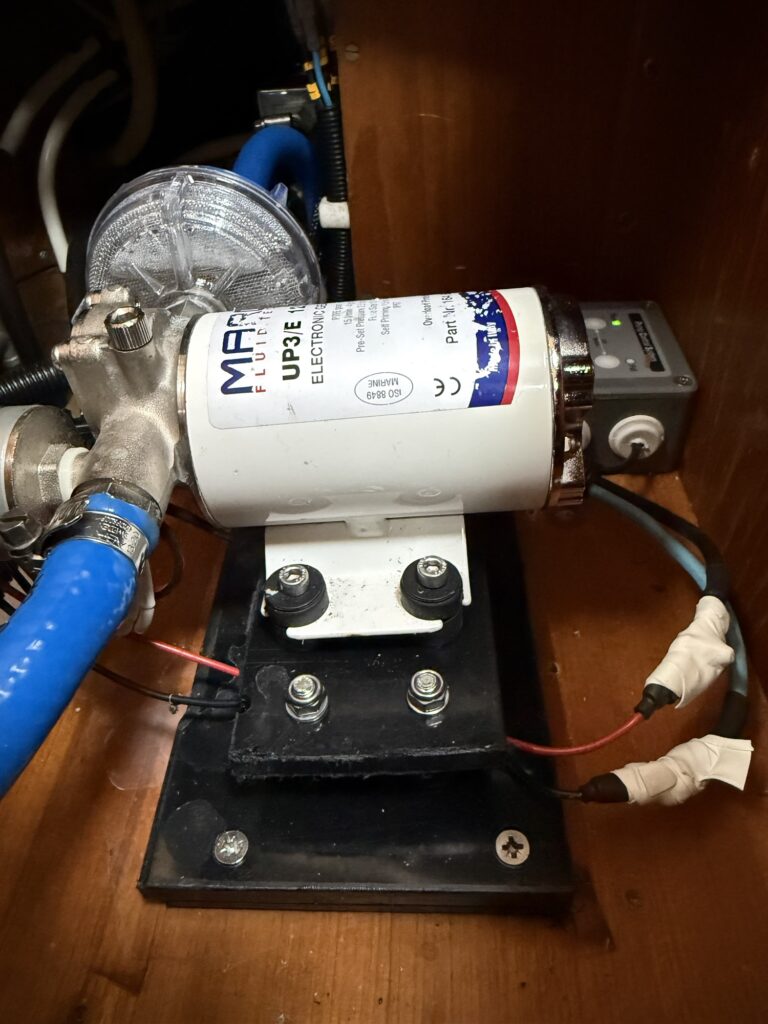
This spring I pointed my AI agent of choice, Perplexity, at the problem and it came back with a pile of sensible suggestions about installing the pump on a noise isolating raft. £10, including postage, got me four rubber mounting bushes, each with an M4 thread protruding on both sides. I used them to fix an 8mm offcut of HDPE sheet floating above another that with some spacers under it could be fixed to the original shelf, whilst the pump was mounted to the floating raft, plumbed in with flexible hose.
The noise isolated raft and pump.
It was a huge success. The noise levels dropped dramatically. Still audible but there was no longer a need to raise your voice or wait till it stopped.
I was very pleased with the pigstick. It did the job beautifully. But as we left Cherbourg it seemed not to be turning so freely. Once out of the harbour, on the way home, I lowered it to see that was going on. It turned out that the lovely roller bearings that I’d thought were stainless only had stainless shells, and that the lower one, that can sit in water, had rusted up solid.
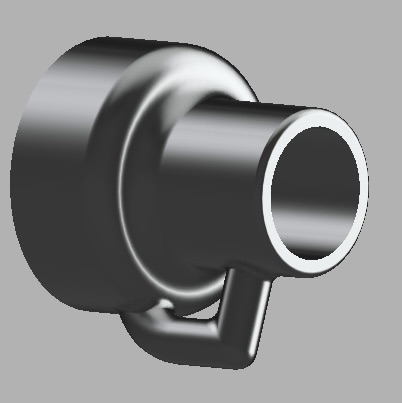
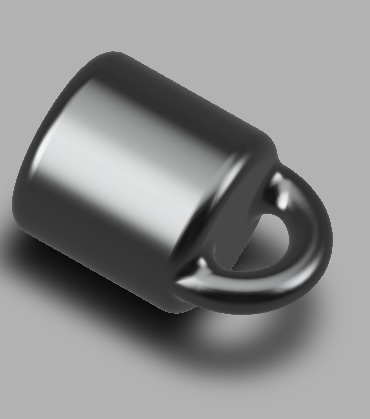
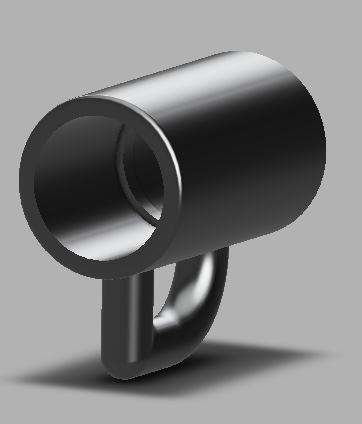
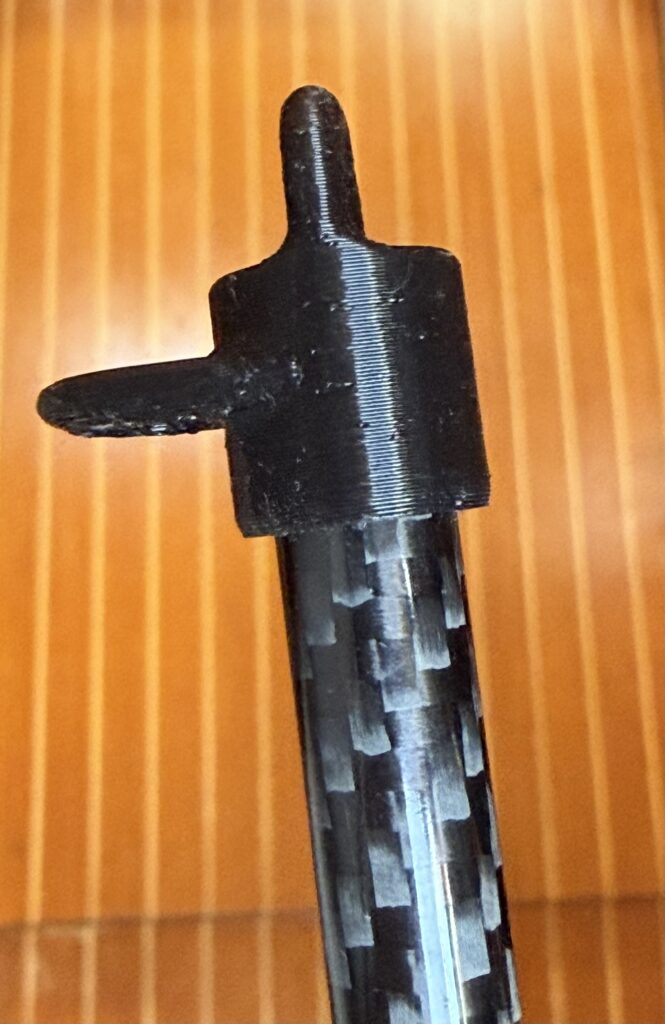
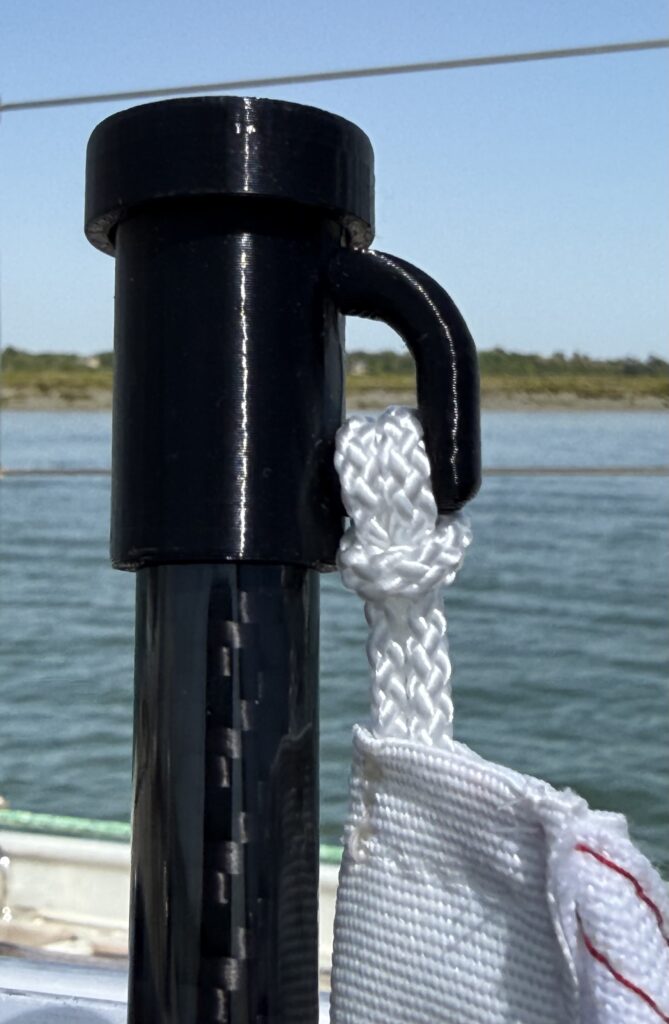
Mark 2 was clearly required. Shopping around I couldn’t find any suitable stainless needle roller bearings but could get some standard all stainless bearings – trouble is they were a fair bit larger in diameter, so I had to redesign the fittings a bit. I printed redesigned end caps for the outer carbon tube, that acts as the carrier for the burgee, with a larger cavity for the conventional bearings. It’s not as slick looking, but works perfectly and has now coped with a couple of weeks of use.
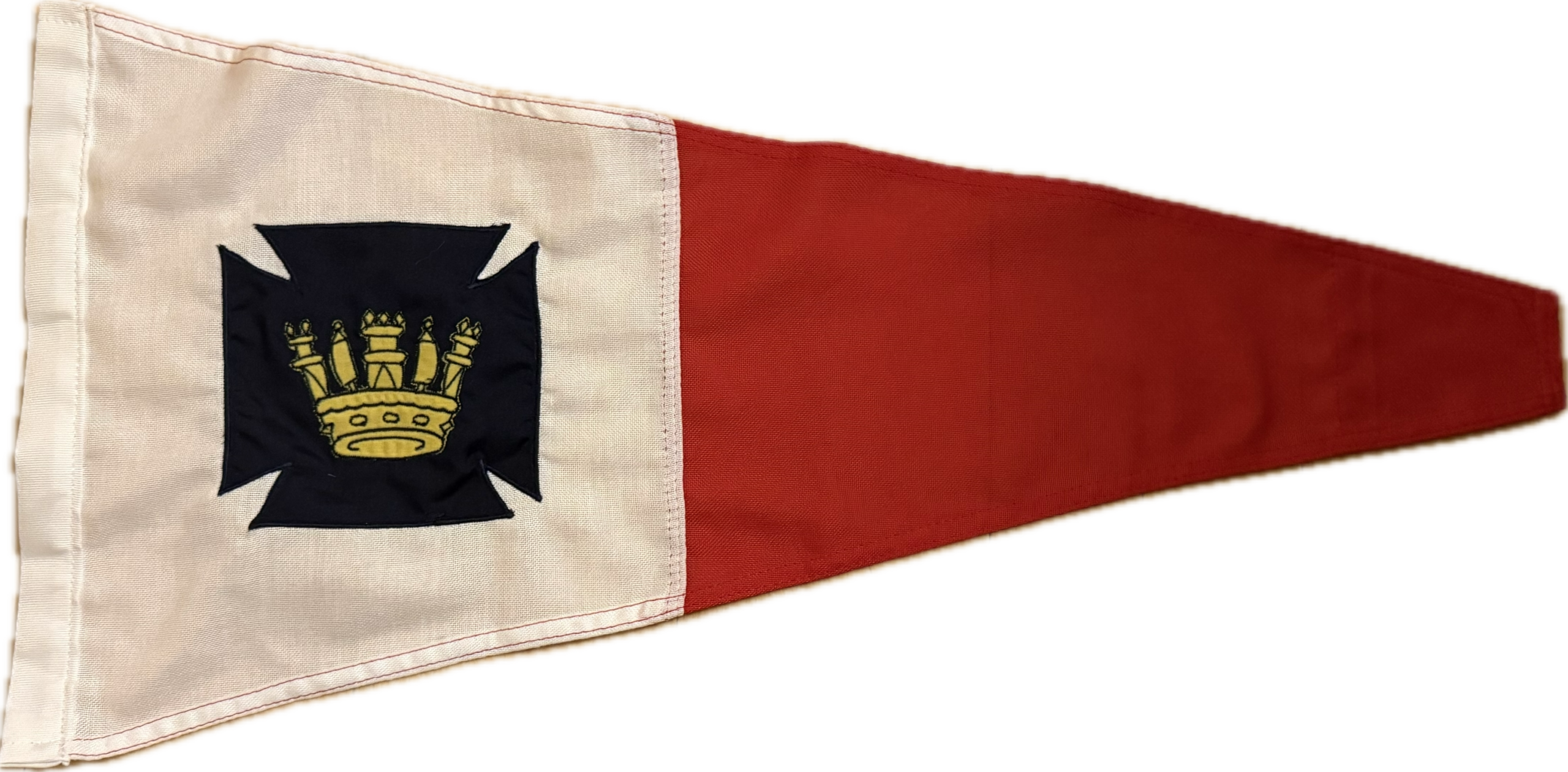
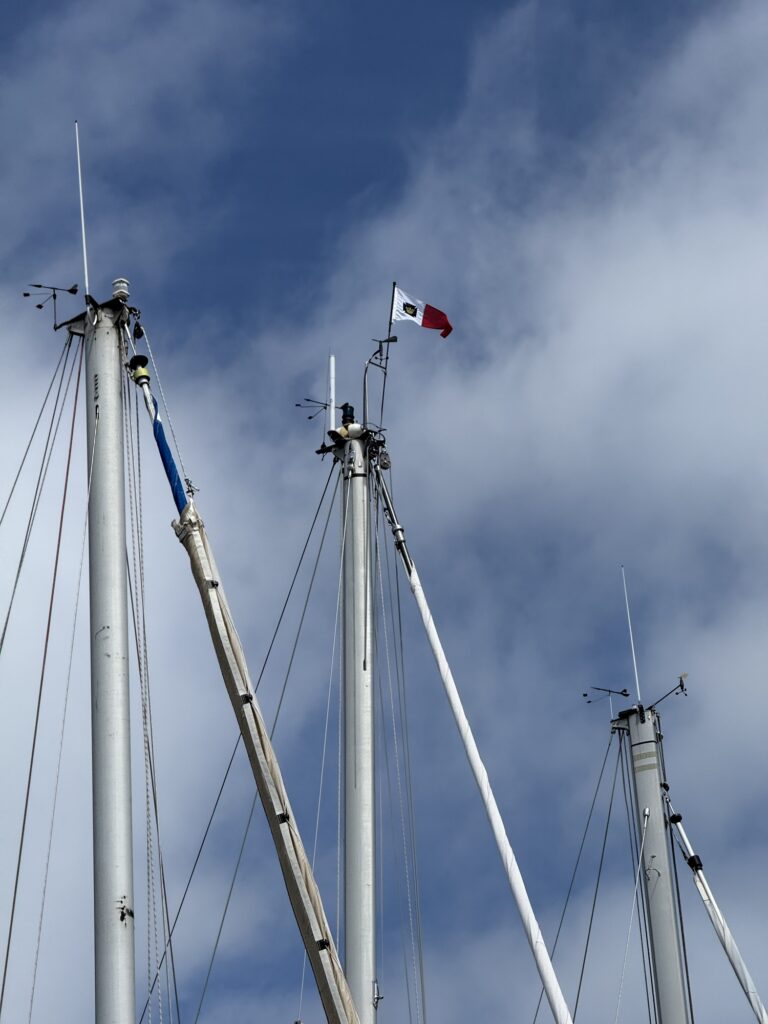
I became a member of the Royal Cruising Club (RCC) this year. The club has been very welcoming and has a thriving online community, as well as regular events and meet ups. It is of course the home of the RCC Pilotage Foundation, the publishers of most of the pilot books I’ve depended upon for years. I hope, in the future, to get involved in producing and maintaining these. The club is pretty relaxed, but does have a thing about flag etiquette. Members may choose to fly an undefaced blue ensign, which is a privilege rarely afforded to Sailing Clubs, but they insist that all members fly the club burgee from the truck (or masthead) at all times. The idea is it makes you easily identifiable and thus facilitates members saying hello to each other – which makes sense, especially for a club with no land base, where the whole point is to be away cruising.
Practically it’s a bit tricky: modern mast heads bristle with radio antennas, wind instruments, radar reflectors and the like. The solution is a small crane that extends a light halyard clear of the masthead. The problem with this is that the burgee can’t rotate freely and will ultimately tie itself around the crane – in my case some 20m above the deck. This is where a pig stick comes in: it’s a stick which can be hoisted with the crane halyard, but that will extend above the crane and around which the burgee can freely rotate. Traditional solutions involve garden canes and coat hangers.
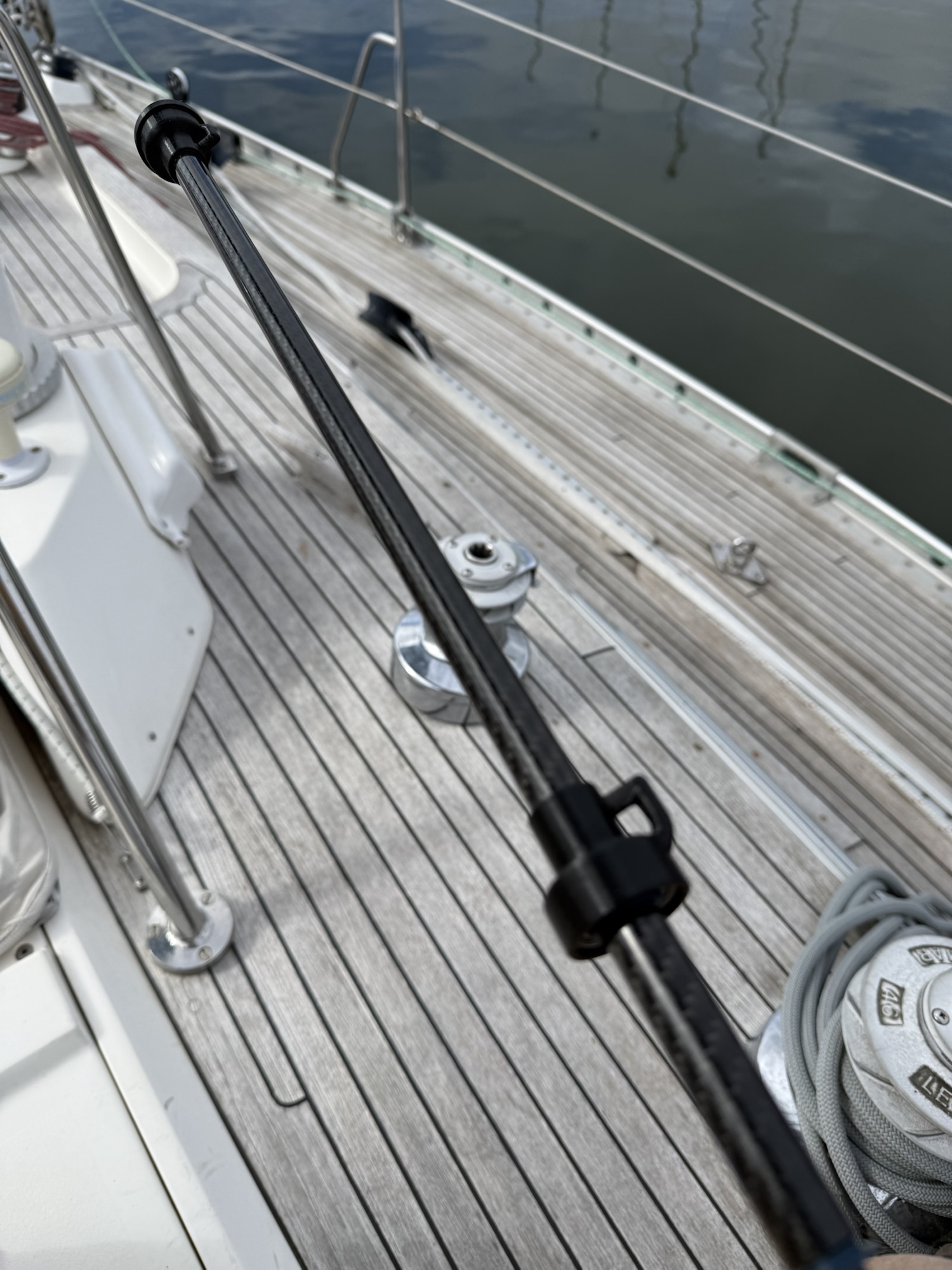
I felt the need to overengineer this a bit. Two lengths of carbon fibre tube, some epoxy, a few 3d printed parts and two sets of roller bearings later I’ve got a solution.
Its a 2m 10mm diameter carbon tube, with a second larger diameter tube mounted on roller bearings, long enough to support the burgee that sits on a bushing and it held on by a top cap.
Bottom fittingTop Fitting
I’m pleased to say it works rather well. It’s been up for five days now and seen gusts of over 30kts without a problem, and the burgee remains untangled.
One of the over winter projects was tackling the vibration we’d noticed from the propellor last summer. It had got bad enough that we’d had a diver check that it wasn’t fouled.
We have a Max Prop. It’s a clever feathering prop design, where the pitch can be adjusted – and even be different ahead and astern. It can also be easily adjusted between left and right handed rotation. When under sail the prop will automatically feather to a very low drag configuration, and the pitch is wound back on when the engine is put in gear.
Once we got Trouper out of the water it was obvious that the Max Prop was badly worn, The prop was original and dated from 1989, and had been serviced twice before, once by me. That had cost about £600 some ten years ago so I wasn’t looking forward to the bill. Worse still the advice at the time had been that it could be done a third time but that was likely to be a shorter lived repair.
Armed with this knowledge I got in touch with Max Prop, who’d been very helpful with new settings for the prop when we replaced the engine, a couple of years ago. They were really helpful and offered a part exchange replacement for their new model, that features simpler adjustment, for ‘only’ €1300 plus UK import duties. A new one retails for several times this.
So just before Christmas I got the old one off – which proved to be quite a job after I rounded a hex socket on one of the bolts and had to drill it out. It took both a bearing puller and a blow lamp to get the core of the prop that has a taper and keyway in it to match the taper and key on the shaft off. It was duly packaged off and couriered to Max Prop in Italy before we went to Canada for five weeks. It never got there, and it appears that it was lost in Italian customs. At this point I was a bit worried that without the old one I was in for the price of a new one – and of course the carrier insurance proved to be worthless as you had to show the purchase invoice for the lost item, not it’s replacement.
Max Prop however rose to the occasion and agreed to honour the deal – despite not receiving the 14kg of scrap bronze in exchange. They shipped a new prop with a taper and thread to the specification of the original drawings. Beyond a little adjustment of the key it fitted properly and was on in time for the boat to be launched.
Once afloat I recommissioned the engine (after sorting out some other stuff) and discovered on putting it in gear on the berth that we went astern when ahead was engaged and astern when ahead was engaged, We have a conventional right handed rotation, but I suspected that we’d been shipped a prop set for left handed rotation. A quick google established that on the max prop easy that we now had it was a simple adjustment to change from one to another. I got in touch with Max Prop and they agreed that this was the likely cause, so I booked a lift for the following Friday where the boat would be held out of the water whilst I adjusted the prop.
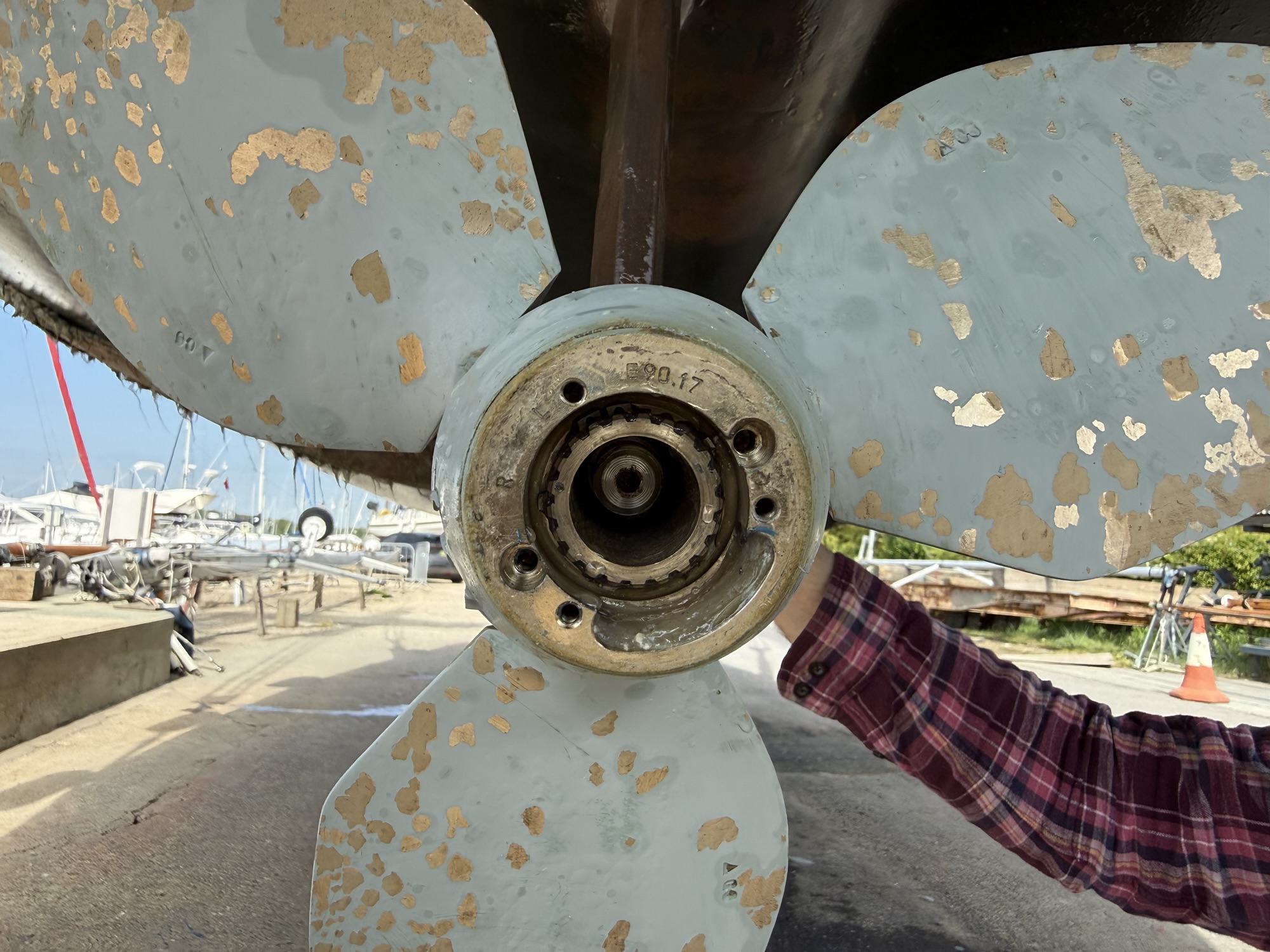
The video above shows what we found, and the general operation of the max prop, together with the evidence that I really need to try harder at antifouling the prop.
Unfortunately what this also shows all too clearly is that the prop is set for right handed rotation. The dot on the inner ring is clearly aligned with the R stamped into the outer ring. It was at this point that I realised that the Italian’s take their May day bank holiday on the Friday, not the Monday as we do. I coulnd’t get hold of them at all. So we put the boat into the yard ashore and I took the prop off and home, giving up on any idea of going out on the boat for the Bank holiday.
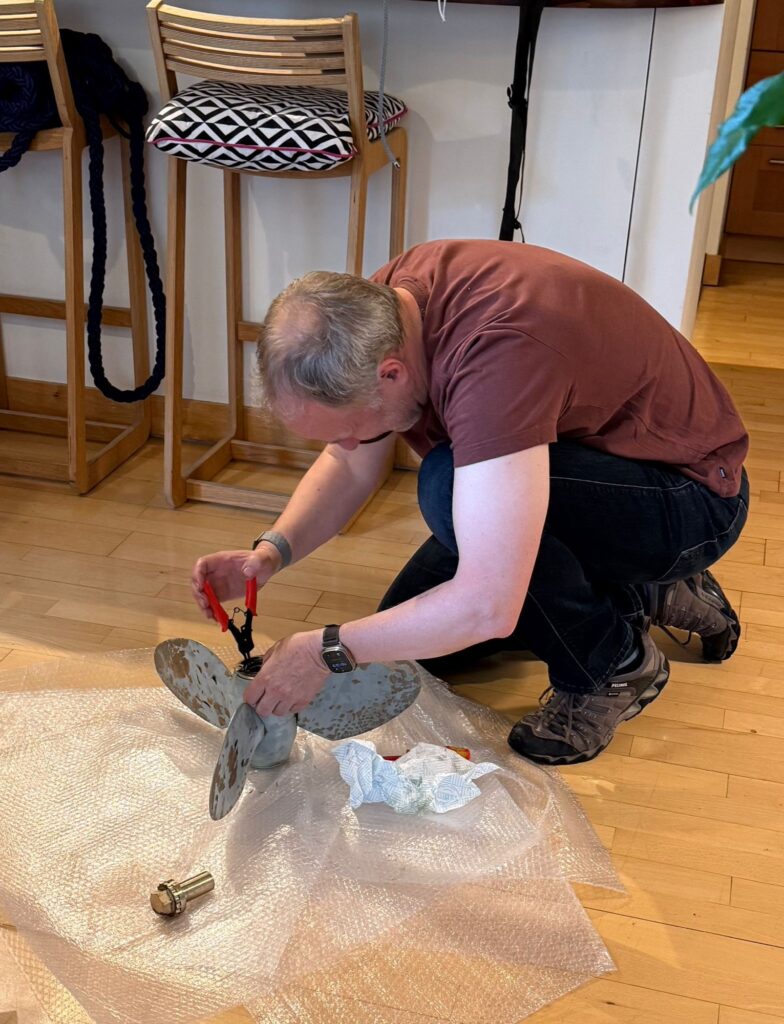
On the Monday Max Prop got in touch and we were reluctantly getting ready to ship it back to them in Italy – all very conscious of the lost prop last time and the likely 2 week delay at best. As a last measure we all got on a whatsApp video call and they examined the prop whilst asking me to move the blade positions. They spotted a problem – the inner sleeve appeared to be out by one notch. After a trip to screwfix for me to buy some circlip pliers (mine were all at the boat yard, I don’t commonly need them in London) it was a fairly quick and easy job fix it with them showing me what to do using another prop on their bench in Italy.
Adjustment underway
Then it was just the matter of another Friday off work, and another crane lift to put her back in the water and test that all was working as it should. Max prop had been so good around the lost parts at the start of the year that I decided that I’d not try to recover the cost of the lifts – it seemed as though one good deed deserved another.
Being lifted into the water – I never like this bit.
Thankfully I could drive her back onto her berth without a problem: it was fixed, and will hopefully now last another 35 years or more.
Trouper went into Nautor’s Hamble yard for a mini-refit in late October 2025. The main job was to remove the rig and renew the rather elderly rod rigging. There were a few jobs that it made sense otherwise do at the same time, such as replacing the radar, as it is only possible to re-run that cable with the rig out of the boat.
Rod – this was all renewed, with new bottle screws. Unfortunately the rigging subcontractor got their sums a bit wrong and has made the rods that run from the lower spreaders to the deck and the lower diagonals too short. Currently there is an interim solution using some extra toggles at deck level in place, and they’ll be swapping in new sections in the spring.
Compass – this has been a problem for some years. Id thought it just needed correcting. The Nautor guys arranged to swing the compass with a compass adjustor on board (much easier to arrange in Hamble, than Birdham). They identified that the problem was not the need for correction but rather that the bearing that the compass rose tuns on was sticking. Nautor managed to find a firm in Newcastle who appear to be the last people in the country able to rebuild compasses. I could have bought a new one, but ones as large as Trouper’s are no longer available, and critically the current one has the Swan logo on the compass rose. Happily the compass is now rebuilt – and for less than the cost of a new good quality one. Unfortunately the lamps were lost in the process, but Nautor are sorting out replacements for me.
The wire checkstays were changed for Dyneema. I wanted this to reduce chafe on both the mainsail and the boom as the checkstays are often rubbing against them when under sail. We decided to replace the babystay and backstay with dyneema too. The backstay went on whilst with Nautor but the babystay will be added in the spring when they sortout the shroud length issues.
After much deliberation I decided to replace the radar with the modern Furuno model. This had the great virtue of the same bolt fixing pattern as the old one, and they have a reputation for making stuff that works for ever. I’ll write a separate post on my experiences of using it. In the end I chose to use a computer software display solution for it rather than a dedicated display.
Nautor also commissioned an electrician to inspect our Victorn Lithium battery and charging system that I’d installed as our insurer had asked for something. They’d said an email was fine – what we got back was a rather grander pdf covered in logos but I was a bit smug to read that they thought it was a good installation, to a high standard.
I’ve subsequently tackled a few more jobs.
The Nautor guys pointed out that my halyards, especially the spinnaker ones, were really rather tatty. This was a big ticket item as I ended up replacing both spinaker halyards, one of the jib halyards, and one of the main halyards. I was able to buy a drum of 12mm dyneema cored rope and make up the halyards myself, which helped on the costs, though the rope itself was expensive.
The lazy jacks were also looking a bit tatty after 7 years uses so I bought 100m of the Lyros lazy jack line and remade those, which was a fairly quick job, and replaced all the fender lines whilst I was at it as they are made of the same stuff and were a bit tatty.
Last summer we’d added to the chafe damage on the mooring lines that had come with the boat. It was a good set of nice lines but they are probably 15 or more years old and with chafe damage usually in the middle we had fewer and fewer long ones and ever more short ones. I’d been eyeing up what to use for new ones and had settled on a lyros product that is designed to be especially stretchy which will help in windy or bumpy conditions. I used the halyard rope order as a chance to get a bit of a discount on 100m of that two, whcih I’ve cut down into 2x10m, 4x15m and 2x7m lines all with a decent sized eye splice at one end. I’ve used whippings on the unspliced end to indicate the length which should help finding the ones you want in the locker. We still have two 25m long shore lines in the locker too, so we’re very well proivded for now.
Replacing the worn Max Prop. This turned into a bit of a saga so gets its own post.
Patching the copper coat where some has come loose. That turned out to be a simpler job than I’d feared – as ever decent suface preparation and then following the instructions did the trick.
Our 12 year old liferaft failed it’s 3 yearly inspection, as it no longer maintained it’s pressure over 24 hours. Wouldn’t have stopped it working if we’d needed it but it marked the end of it’s useful life. Suffolk Marine safety sorted out a suitable replacement for a reasonable price. I want a robust well specified one (if you ever need it you’d regret penny pinching) capable of taking six people, and it has to fit inot the storage cage on Trouper’s coachroof.
As someone who has spent a lot of time teaching people to use powerboats safely it is interesting to see the French approach to risk management and safety. The UK has a sad history of accidents resulting in deaths and serious injury from using powerboats, especially RIBs. That’s resulted in an approach to managing them and ‘good practice’ standards that are far removed from what I see here. To be clear I see no evidence of the French approach being dangerous, and indeed I suspect that they don’t have our history of accidents, suggesting a higher standard of safety. But what I see would have many of my UK colleagues tutting: no kill cords in use, sponson riding, indeed driving the boats from the sponson and driving whilst standing, even with tiller steered boats. And yet the standard of boat handling is consistently very high with a casual and unconsciously competent displays of excellent boat control.
More generally I can’t help but notice that the French approach tends towards less physical infrastructure and more towards people being encouraged to be sensible. Walking on the wave screen wall at Trinite there was no railing either side – just an obvious edge. Walking around an old castle there was no fence to the drop into the dry moat, just a band of about a meter of larger pebbles to delineate where the safe footpath finished. I must confess I do like the approach of expecting a bit more from people, although I’d still favour the use of kill cords – once you’re used to them they really aren’t much of a pain and are a simple mitigation to a low probability, very high impact event (ie falling out and being mown down by your own boat and propellor).
When, in a former life, I did my professional training in Occupational Health and Safety we were taught a clear hierarchy of desirability of risk mitigations: safe place was far preferable to safe person. the thinking was that in a workplace you should not need specialist knowledge or equipment to stay safe. In a controlled environment that still seems to me to be the preferred solution: you provide effective dust or fume extraction, not respirators to anyone who enters the space. But I wonder if that culture has bled out from making factories and laboratories safer workplaces into the wider public assuming that their safety will be managed for them and that they don’t need to worry about it. That might be one of the reasons why the construction industry has long struggled with its safety record – construction sites are usually difficult to control fast changing environments.
There’s been a lot of research showing that risk perception can have an outsize impact on risky behaviours: across London railings have been taken down around pedestrian crossings, and pedestrian injuries have been reduced. Car drivers are slower and more cautious around exposed pedestrians, yet the old railings afforded little real protection to the pedestrians. I wonder if the French approach to boat handling and education is more effective. But then every town we’ve visited has had huge sailing schools taking all the local children out, so familiarity with the environment is deeply ingrained knowledge.
Cameret proved to be a nice little seaside holiday town that was having a Fete for the local lifeboat, complete with helicopter winching exercises off the quay a little after we arrived. The visitors berths a quite a walk out along the breakwater (no railings…) and the sanitary facilities are a bit basic. We elected to shower on board for the two nights we were there.
Whilst in the Morbihan we’d used the boat’s black water holding tank to capture toilet waste and then pumped out in Port Du Crouesty. The boat was built with a holding tank for the aft head, and you can choose to flush to toilet into the tank or over the side. When built the only way to discharge the tank was to pump it out (by hand) back through the toilet’s normal discharge over the side. For our trip to Holland some ten years ago I’d also fitted a deck pump out fitting allowing the tank’s contents to be pumped ashore. That turned into a bit of a mission. I couldn’t find a pump out deck fitting that visually matched the existing deck fittings for water and fuel. Finally I contacted Nautor, the makers of Swans, in Finland and they explained that the fittings on our boat were custom made to their specification. They offered to have a pump out fitting made to match. It cost about 500Euros in the end, but I felt it was worth it to keep the boat (and Swans of this vintage are sort of iconic) looking right. Anyway in the end it all seemed a little excessive as we never found anywhere on the Dutch canals with a working pump out station, despite all the warnings before we got there that it was mandatory to pump out ashore. I’ve never regretted having the option but had never actually used it before. We connected it up and pushed the button and could see liquid being extracted through the window in the hose. It took a good ten minutes to suck the 120l tank dry. Carteret saw the tank put back into service, though I pumped it out by hand once suitably offshore.
Bespoke Pump out Fitting from Nautor – it weighs about 4kg!
We had two nice dinners ashore in Carteret, and a much needed trip to their excellent SuperU to stock up before we left this morning to head North and up through the Chenal Du Four. After filling up with fuel (215l, the first since Brest) we sailed for a bit to start with before the wind died away. It was grey all day, though not at all cold.
Pte de Saint-Mathieu at the Southern entrance to the Chenal du Four.
By later afternoon we were working out way into Aber Benoit where we picked up a visitor mooring, put the kettle on and tidied up. The harbour master popped by, took 18Euros for the night and offered to take any rubbish ashore if we needed, which was welcome, though not needed.
We left Cherbourg on Wednesday, filling up with diesel before we left at the self service pumps. The 300Euro maximum for a card transaction filled one tank and took the other to 92% so we left it at that and headed off. We took a fair tide to Cap de la Hauge and saw a fair bit of water over the deck, though never in the cockpit, in the overfalls as we motor sailed into the Alderney race.
Our straight line course to Treguier took us down the Big Russel channel between Sark and Herm passing lots of fond memories – more than one involving food on a beach – before a fairly dull 40 mile stretch towards the French coast with the engine thumping away all the time. It was uneventful except for some dolphins joining us mid afternoon just after I’d gone for a nap – Kathryn had no hesitation in banging on the cockpit sole to summon me back on deck, and I was glad of it. As ever the dilemma was whether to just soak up the moment or to go and find a camera to get a record. This time we both settled on just enjoying the moment, which was over all too soon.
Tregieur entrance is a bit wiggly and needed some attention at the end of a long day – we were easily 12 hours in by then, though had both had naps.
But once in, and up the river a bit, it is very snug and sheltered. We elected to anchor as we planned to be off the following day. We picked a lovely spot a little downriver from the town and across the river from a Chateau. A quick shower followed by a long sleep was in order.
I am very pleased to report that the coolant leak seems to have been a loose hose clip on the shut off valve for the hot water calorifier (domestic hot water is heated using the engine cooling circuit, when the engine is running, or, on Trouper, by an immersion heater when plugged into the shore, or from our diesel heating). We’ll probably now carry the remaining 4.5l of coolant around as a talisman against leaks for the foreseeable future.
On Thursday morning we had a leisurely start to the day and I got our newish solar panel array out for it’s first real test in bright conditions.
The FlinKite solar array is very neat – it hoists out of it’s storage bag on a spinnaker halyard and plugs in on the back of the forward dorade box. It has a notional 200W capacity, and can be orientated to point at the sun and operate as efficiently as possible. Without any real care in pointing it, it was generating 180-200W, as you can see from the display. For us that’s great news as it means it will outpace our electricity consumption at anchor and remove any need to run the engine for battery charging. At sea there is a big 225 Amp alternator managed by the battery management system that can very quickly put charge back into the 660 Amp hour LFP battery bank. The great thing about LFP battery chemistries is their very high charge acceptance: it will accept pretty much as much as we can generate.
The holding was excellent in the river and despite all the pilot books’ warnings about the strength of the tide, albeit at neaps, we barely troubled the anchor all night. I put 40m of chain out and even when the tide turned I don’t think we pulled it straight in the mud. It certainly took some cleaning.
Anchor Watch Display
We left on Thursday lunchtime for a smaller hop down the coast to Roscoff where we plan to spend a few days, partly to do chores such as laundry, and partly to let some weather blow through. Finally on this leg we were able to actually sail for at least half the passage and were making a nice 6.4kts in 10kts of breeze on a beam reach for a period. It was so lovely to be at sea without the thrum of the engine. Kathryn made a lovely dinner of trout fillets, new potatoes and veg which I’m sure tasted all the better for the noise of the water gurgling past Trouper’s transom.
Over the last few years I’ve invested a lot of time, effort, and a fair bit of money into getting Trouper set up for extended cruising. We’ve installed a new engine, a large Lithium Iron Phosphate battery bank with a large alternator to charge it, and a hostable array of solar panels. Our plan has been to spend a couple of months away this summer, partly as an end in itself and also to test out how we might like spending months at a time on the boat at some point in the future.
The last few weeks have seen a slightly frenzied sprint to the line. Inevitably I finished some parts of this this morning as we got ready to leave the marina. Last week saw the very just in time delivery of the new bed linen, the renewal of the sprayhood canvas and some fitted cockpit cushions. The previous few weeks have seen some repainting of the coachroof’s blue stripe and the fabrication of a bracket to hold a starlink mini dish on the stern of the boat. Completing the starlink install, and reassembling the outboard motor’s mounting bracket (with some new bits) were the last jobs this morning.
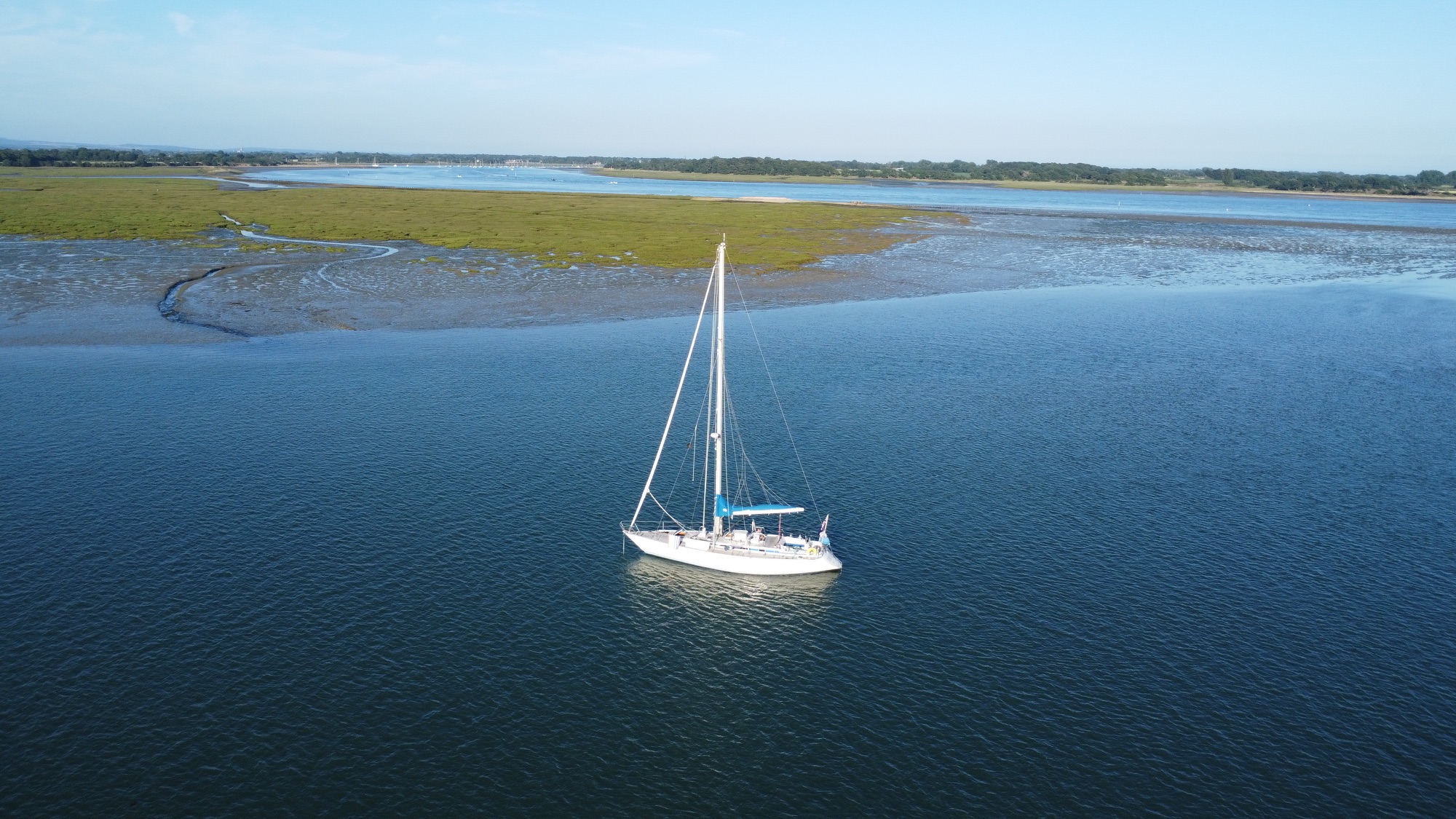
We slipped our berth at 1515 today (29 June) and left through Birdham’s lock at free flow (the top of the tide where both inner and outer gates are open at once). We motored a whole mile to anchor in the harbour in the Thorney channel. We aim to leave at about 0530 tomorrow for Cherbourg – I’ve send the French PAF their entry form and completed the UK online departure notification – so hopefully all the admin will go smoothly.